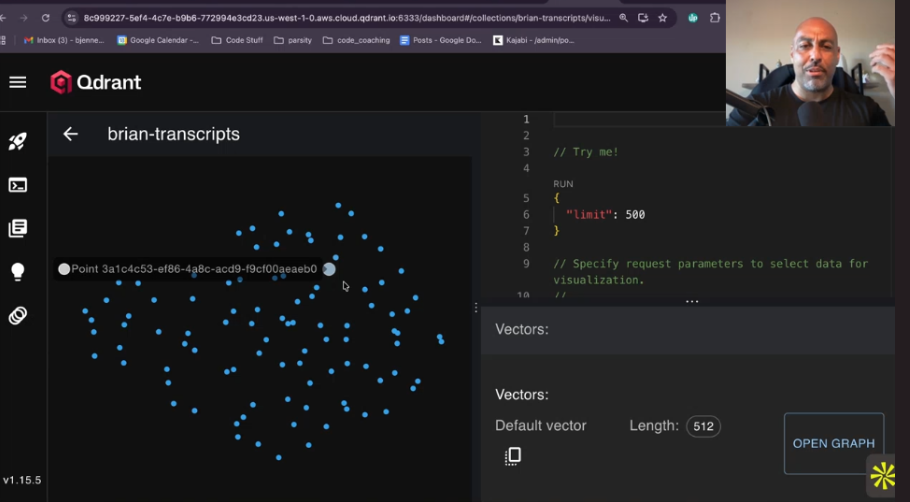
Become an AI engineer in 45 days
Most developers have called an OpenAI API and built a demo. Very few can build a RAG pipeline that works on messy production data, design an agent that does not fall apart under load, or explain to their CTO why they chose one over the other. This program teaches the second thing.
45 days. You build a production AI system, you get weekly feedback on your code from engineers who have shipped this stuff, and you learn to explain your architecture out loud to people who sign the checks.
No pitch. If it is not the right fit, I will tell you.
Got questions? See how it works
Curious what "AI engineer" actually means day to day? We walk through the exact path, step by step: RAG, production agents, evals, and observability.

Doing a live class for our AI Engineer Cohort is taxing. Not only for me but for the students.
We're all working software developers. Many of us have families. It's really late for some of the devs who are outside the US.
So why do we keep running this program? It works.
This is our 4th live cohort. The live sessions have near 100% attendance and completion rate. The students are more engaged and more likely to share their thoughts in Slack, show up to office hours, and come to events. Nearly all of our success stories come from students in the live cohort.
That doesn't mean a self-paced version won't work. In fact, I'm making changes to our self-paced program, including personal mentors, so everyone feels the pressure to succeed.
If you want the version where someone is expecting you on a Saturday morning, take the cohort. If you would rather move at your own speed with a mentor checking your work, take self-paced. Both get the same curriculum and the same people reviewing your code.
— Brian, founder of ParsityPick your continue screen.
- Full curriculum, start whenever you want
- 5 one-hour sessions with a mentor
- Weekly homework with written feedback
- Capstone project with feedback
- Monthly guest speakers and office hours
- Slack access
Everything in self-paced, plus:
- Six live sessions taught by Brian, Saturdays 11am–1pm PST
- Starts October 10
- Live code review and debugging with the group
Do the first week. If it is not what you wanted, I will give you your money back. Put in the work, and if it is not worth it, tell me at the end of week one and I refund you in full. I do not take people's money and not deliver.
Your employer can probably pay for this. We provide invoices and a training budget request template. A lot of students go this route and it works.
Outside the US? We do purchasing power parity pricing. Email assistant@parsity.io and we will sort it out.
AI Engineer in a Weekend
Can't commit to six weeks? Two days, and you leave with a deployed, production grade AI agent: vector database with agentic retrieval, observability, evals, human-in-the-loop. For software developers only. 12 spots, $497.
What everyone else charges
| Cost | Format | |
|---|---|---|
| Parsity self-paced | $1,197 | Remote, start anytime |
| Parsity live cohort | $1,997 | Remote, six Saturdays |
| Other AI bootcamps | $5,000–$15,000 | Most require relocating to SF or NY |
| CS or AI degree | $20,000–$60,000 | 18–24 months |
We are not cheaper because we cut the curriculum. We are cheaper because there is no campus, no admissions department, and no sales floor. The money goes to engineers who review your code.
Not ready for six weeks? Build an agent in one weekend.
A two day live workshop, four hours each day. Saturday you build retrieval over messy real data. Sunday you turn it into an agent with tool calling, evals and observability, and deploy it to a real URL. TypeScript and Next.js. Twenty seats. Repo, accounts and API credits are ready before day one.
Two days. Twenty seats. Dates go to the interest list first.
- Eight hours of live building, with help the moment you get stuck
- Repo, accounts, starter app and API credits set up in advance
- The deployed app and the repo are yours to keep
You hear first when dates are set. Nothing else.
Want to see the whole thing first?
Every project, every technology, week by week. I will send it to your inbox and then leave you alone unless you want to hear from me.
No spam. Unsubscribe whenever.
The skills gap
There's a massive difference between using AI tools and building AI systems. Most developers are stuck on the wrong side of that line.
They've experimented with ChatGPT. Called an API. Maybe built a demo. But companies increasingly need developers who can implement production AI systems: RAG pipelines, agent architectures, LLM orchestration, and observability.
RAG and AI agents are becoming foundational engineering skills. The engineers who can build these systems are the ones companies cannot find.
Companies are not short of applicants for these roles. They are short of engineers who have actually built these systems, which is why the listings sit open for months.
The fix: six focused weeks on the exact stack companies are trying to hire for.
What developers are saying
"This course has taken me from wondering how working with RAG, agents, and LLMs work, to now building these things myself, with the understanding of exactly what's happening. It has really empowered me to learn by building things."
"Brian's course cut through so much of the AI hype fog for me. Not only did he do an amazing job scaffolding AI literacy onto my full-stack background in general, he provided super practical pathways into implementing AI within very real world circumstances. This is one of those courses that'll keep on giving for me."
"The course was brief but jam-packed with so much information. Brian has a great teaching style that keeps you engaged and encourages discussion. The course flew by, but I feel very empowered to build my own AI apps with RAG (and be able to explain how it works)."
"I truly enjoyed my time in this course. It was a privilege to get to learn from Brian and from the other students. I loved the hands-on experience we gained building robust RAG pipelines. I highly recommend this course to anyone who wants to grow in their skills with AI development."
"I thought I had a solid understanding of AI and LLMs going into Parsity's program, but finishing it made me realize I was only scratching the surface. Getting a hands-on walkthrough of how these systems actually work and going beyond prompting was a complete game changer."
"This was my first bootcamp after almost 10 years in the industry and I have to say that it exceeded my expectations. I now have the confidence and skills to go out into the world and build awesome agentic RAG apps."
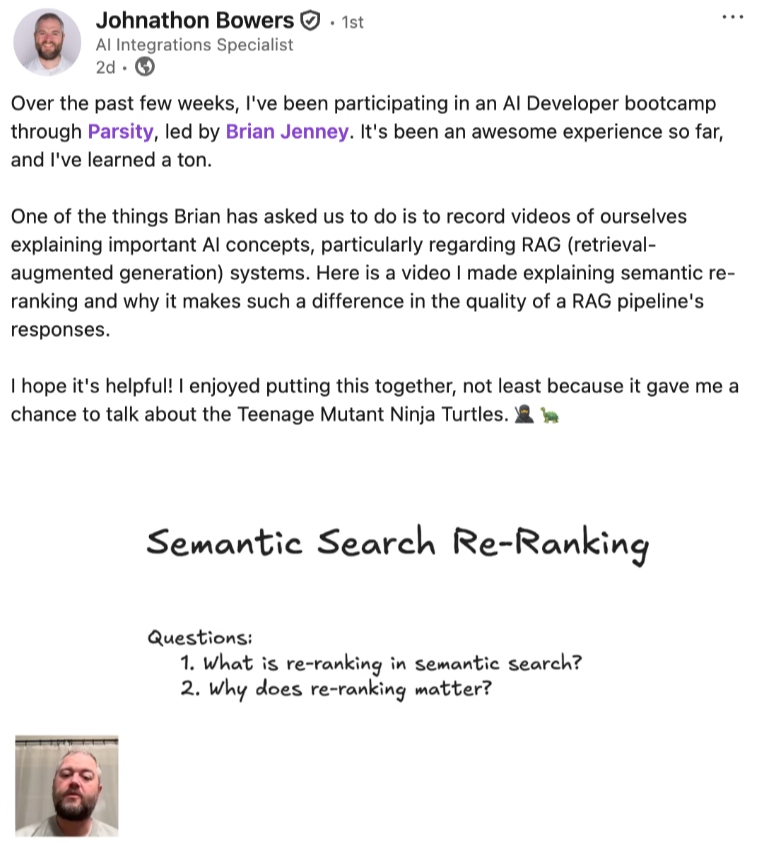

Watch him actually teach this
Real videos from Brian's YouTube channel (10,400+ subscribers) — not a highlight reel, the actual RAG/agent teaching.


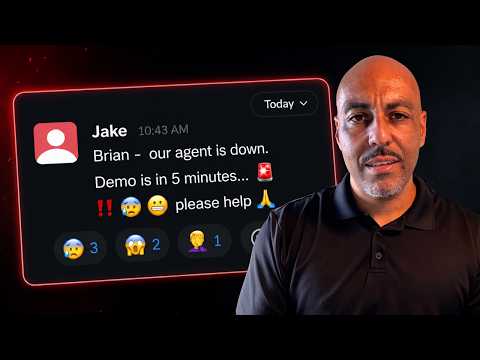
Is this right for you?
This program positions you for roles like AI Engineer, Applied AI Engineer, LLM Engineer, and AI Product Engineer. But it requires serious commitment.
This is for you if:
- You're a working developer who can already build and deploy apps
- You want to command the compensation premium that AI implementation skills are earning
- You're willing to commit six weeks of focused work, not passive watching
- You want production AI projects that demonstrate genuine engineering capability
This is not for you if:
- You haven't built a full-stack app before
- You want a certificate without doing the projects
- You're not willing to record yourself explaining your work out loud
What's included
Everything you need to go from "I've experimented with AI" to "I can build and ship production AI systems."
Both tiers get:
- Full curriculum. RAG from scratch, vector databases, agent architecture, LLM observability
- Weekly feedback on your code from a mentor who has shipped AI systems
- Capstone project with written feedback
- Interview prep and career positioning
- Monthly guest speakers, office hours, Slack
The cohort adds:
- Six live sessions with Brian. Saturdays, 11am–1pm PST
- Live debugging and code review with the group
- A cohort of nine other developers going through it at the same time
Communicating to leadership
Every week you record yourself explaining what you built, as if you were presenting to a non-technical CTO. Then you get notes on it.
Every developer who has landed an AI lead role out of this program says the same thing: being able to walk leadership through their decisions, without making anyone feel stupid, was the difference. Nobody else trains this. We do.
Frequently asked questions
Which one should I take?
If you have historically needed a deadline to finish things, take the cohort. Attendance and completion in the live sessions are near 100 percent and most of our success stories come from cohort students. If you are self-directed and would rather not give up six Saturdays, self-paced is the same curriculum with the same mentors reviewing your work.
Why is the deposit only $97?
Because the cohort caps at ten and I need to know who is actually coming. It is refundable until the cohort starts and it comes off your tuition. It is not a test of your commitment, it is a seat. The same $97 holds a self-paced spot, and I will email you your balance either way.
Do I have to get on a call to sign up?
No. The price is on this page, the button works, and you can enroll right now. If you want to talk to me first, book a call. Most people who join do talk to me first, but that is because they want to, not because I make them.
What level do I need to be?
Any level, junior to senior. You need to be able to build and deploy apps. You don't need AI experience. You'll have it when you're done.
How is this different from other programs?
Most programs teach you to call OpenAI's API and call it AI engineering. We teach the architecture companies are actually hiring for: RAG from scratch, agent systems, LLM orchestration, vector databases, production patterns.
How much time does this take?
A meaningful amount. The people who get the most out of it treat it like a serious commitment for six weeks. They come out with skills and a portfolio that compound for years.
Why the communication module?
Engineers who can build and communicate are worth far more than engineers who can only build. Every developer who's landed an AI lead role says the same thing: being able to explain their work to leadership was the difference. Nobody else trains this. We do.
Can my employer pay for this?
Yes. We provide invoices and training budget request templates. Many companies have L&D budgets specifically for upskilling engineers.
What if I don't find it valuable?
Do the first week, and if it is not what you wanted, email me at the end of it and I will refund you in full. You have to actually do the work, but that is the only condition. I don't take people's money and not deliver. Contact assistant@parsity.io and we will take care of it.
I'm outside the US, is pricing adjusted?
Yes. We offer purchasing power parity pricing for international students. If you're in a country with different economic conditions, reach out to assistant@parsity.io and we'll work with you.
45 days from now you can be the person your team asks about this.
You already have the hard part. You can build and deploy software. What you are missing is a specific stack that companies are hiring for and cannot fill.
The October cohort has ten seats. Self-paced starts whenever you want.
Money-back guarantee: do the first week, and if it isn't what you wanted, you get a full refund. Questions? assistant@parsity.io